Orsted West of Duddon Sands Ltd v HMRC:
The Facts And Decision
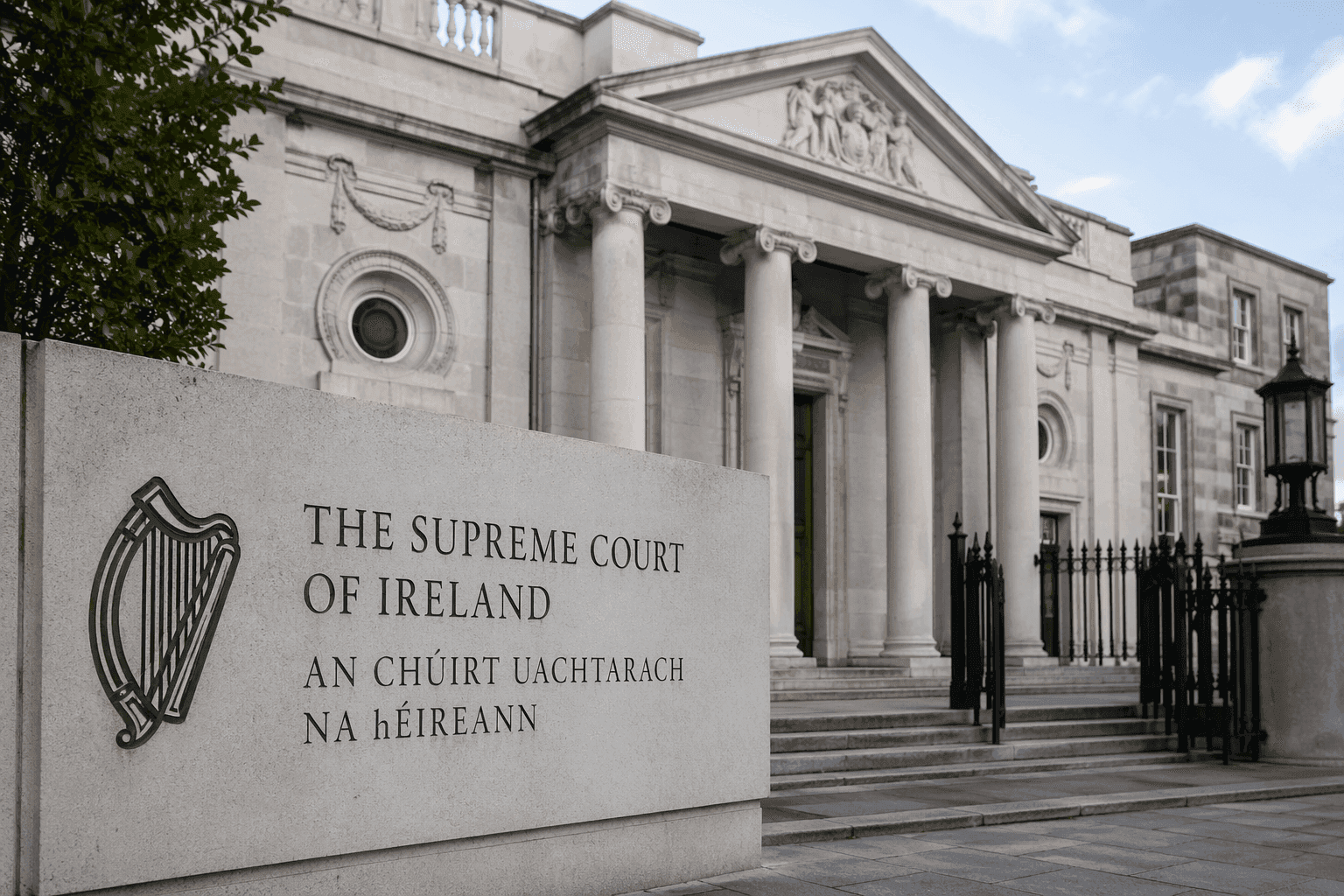
On 15 April 2026, the Supreme Court delivered its judgment in Orsted West of Duddon Sands Ltd v HMRC (commonly referred to as the Gunfleet Sands case), bringing long-running litigation to a close and clarifying the scope of plant and machinery allowances under the Capital Allowances Act 2001.
The Court unanimously ruled in favour of HMRC, holding that survey and study costs incurred before construction do not qualify as expenditure “on the provision of plant.”
Background To The Dispute
The case concerned four offshore windfarms developed and operated by companies within the Orsted group.
Before construction, significant costs were incurred on technical and regulatory studies, including:
geotechnical and seabed surveys
metocean and environmental studies
ecological, noise and telecommunications assessments
These costs were incurred during the design and consent phases of each project and were necessary to obtain regulatory approval and determine how the windfarms would be built.
Orsted claimed plant and machinery allowances on this expenditure under section 11(4) CAA 2001, arguing that the costs were capital expenditure incurred “on the provision of plant” (namely, the wind turbines and related infrastructure).
HMRC disagreed, saying the costs were preparatory and advisory, not expenditure on the plant itself. The dispute has followed a long procedural path, producing differing outcomes at every stage of the tribunal and appellate courts before reaching the Supreme Court. The Supreme Court ultimately allowed HMRC’s appeal and disallowed all of the costs in dispute.
The Legal Test: A Close And Direct Link
The Supreme Court reaffirmed that expenditure must have a close and direct link to the plant itself to qualify as being “on the provision of plant”.
The word “on” requires a close and direct connection, not a loose association.
It is not the same as “related to”, “in connection with”, or “incurred as part of a wider project”.
The Court explained that qualifying expenditure must fall within a “limiting curve” around the plant. This includes the core costs of purchase or fabrication, as well as certain ancillary costs such as transporting, installing, and bringing the plant into working condition.
However, once expenditure starts to take the form of advice, evaluation, risk management or general project enablement, it is likely to fall outside that boundary.
Why The Preparatory Studies Did Not Qualify
A key feature of the judgment is the distinction between helping a project happen and providing the plant itself.
The disputed studies in this case:
Informed decisions about where turbines could be located
Helped secure consents and manage environmental risk
Influenced layout, timing and mitigation measures
Advised on constraints rather than physically creating or installing plant
Even though many of the studies fed into later design work, the Court rejected the idea that expenditure qualifies simply because it “informs design”. That test was considered far too broad.
The Court emphasised that these studies:
did not become part of the physical asset
were not embedded in the plant
were not part of fabrication or installation
Instead, they shaped the conditions under which the project could proceed. As a result, they are treated as development or preparatory costs, not costs of providing plant.
Resetting The Boundary Around Plant Expenditure
The Supreme Court’s decision clarifies, and arguably tightens, how the capital allowances rules apply to expenditure incurred as part of large projects, rather than introducing a new interpretation of the legislation.
The Court did not adopt the broader approach taken by the Court of Appeal which would have allowed a wide range of project costs to qualify once plant was being planned. Instead, it returned to the wording of the legislation and established case law to confirm where the boundary should sit.
In doing so, the judgment reaffirms long‑standing principles:
Capital allowances focus on the asset, not the project
Relief is tied to assets that are used and subject to wear and tear over time
Advisory and preparatory costs are distinct from the cost of providing plant
Seen in this light, Gunfleet Sands brings the law back into alignment with earlier authority rather than breaking new ground.
The Key Distinction: Direct Plant Costs Vs Enabling Costs
The practical dividing line emerging from the case is between:
Direct plant costs (more likely to qualify)
Purchase or fabrication of plant
Transport to site
Installation and commissioning
Costs embedded in the creation or installation of the plant itself
Wider enabling or development costs (more likely excluded)
Environmental impact assessments
Planning and consenting studies
Feasibility and option appraisals
Surveys undertaken to manage regulatory, stakeholder or site risks
Advice on whether or where to build, rather than how to install
This distinction is critical when reviewing large claims where surveys, professional fees and studies are often grouped together.
Costs More Likely To Be Challenged Following Gunfleet Sands
Following Gunfleet Sands, the following costs are more likely to be challenged where there is no clear evidence of a direct plant link:
Environmental and ecological surveys
Planning support and consenting advice
Landscape and visual assessments
Legal costs related to permissions and land rights
Earlystage feasibility and viability studies
Simply showing that these costs were “required” or “fed into design models” will no longer be sufficient.
What Still Falls Inside The Rules?
The decision still allows scope for costs that are closely connected to the physical provision of the plant itself. For example:
Detailed engineering work that produces final technical drawings used directly in manufacturing or installing the plant
On-site surveys carried out during installation, where they are needed to physically install foundations or equipment
Testing and adjustments during commissioning, as part of bringing the plant into working condition
Professional fees during installation, where they relate directly to ensuring the plant is installed correctly
However, this will always depend on the facts. The key question is whether the expenditure is part of providing, installing or bringing the plant into use, rather than earlier planning or decision-making.
The closer the cost is in timing and function to fabrication, installation, or commissioning, the stronger the case that it may qualify.
Grey Areas: Mixed Fees And Project Context
In practice, many projects involve mixed professional fees, where a single adviser provides services across design, planning, risk and delivery. In these cases, context matters:
Is the project plantled, with expenses driven by engineering and installation?
Or developmentled, with expenditure driven by permissions, feasibility and risk management?
The former is more defensible, but robust apportionment will be essential. Broad or unsupported allocations between qualifying and nonqualifying costs are now more likely to be challenged.
Putting The Principles Into Practice: Short Scenarios
Property development (refurbishment)
A building is refurbished with new HVAC and electrical systems. Specialist engineers design the system specifications used by installers; those design costs may qualify. However, planning reports addressing issues such as noise or visual impact are likely to be excluded.
Commercial office fitout
A Cat B fit-out includes bespoke plant integrated into the space. Site surveys undertaken during installation to confirm load capacity may qualify. In contrast, early-stage workplace strategy and space planning studies are unlikely to qualify.
Infrastructure project
A manufacturing facility installs bespoke production lines. Commissioning tests and installation supervision can qualify. Environmental impact studies undertaken years earlier to secure consent will generally not.
What This Means In Practice
The real significance of Gunfleet Sands lies less in the outcome and more in how capital allowances claims need to be approached going forward.
In practical terms, this means moving away from broad, projectled analyses and towards a more assetcentred assessment. Costs should be reviewed individually, with a clear explanation of how each relate to the fabrication, installation or operation of specific plant. Simply showing that expenditure was necessary to deliver the project, supported the design process or enabled progress will no longer be enough.
Claims will require:
stronger linkage between costs and specific plant
clearer breakdowns between plant costs and enabling or preparatory activity
contemporaneous evidence demonstrating timing, purpose and connection to the asset
Mixed professional fees will require careful apportionment, and assumptions or broad allocations will carry greater risk.
Ultimately, the key question to ask of any cost is not “was this needed to build the project?” but “did this expenditure provide plant, or did it provide something else?”
Applying that distinction consistently will require more detailed analysis, but it also provides a clearer and more defensible basis for claims in future.